Explore
Select
Sales

Talk to our team about rollout planning +1 (602) 318-1083

Support

Need help with a live account? support@routegeniusai.com

Planning Core

Build fast, reliable delivery routes with intelligence built in

Route planning is where efficiency happens. Stop sequencing, time windows, and business rules all come together to create routes that your team can actually execute. This page explains how RouteGeniusAI keeps optimization intelligent but practical.

Sequence

Stop Sequencing

Build optimal route sequences using AI-powered optimization.

  • Import stops from your dispatch system or upload manually from spreadsheets and CSVs.
  • Routing engine analyzes all stops and generates the best sequence to minimize miles and time.
  • Human dispatchers can adjust sequences manually if they know something the algorithm doesn't.
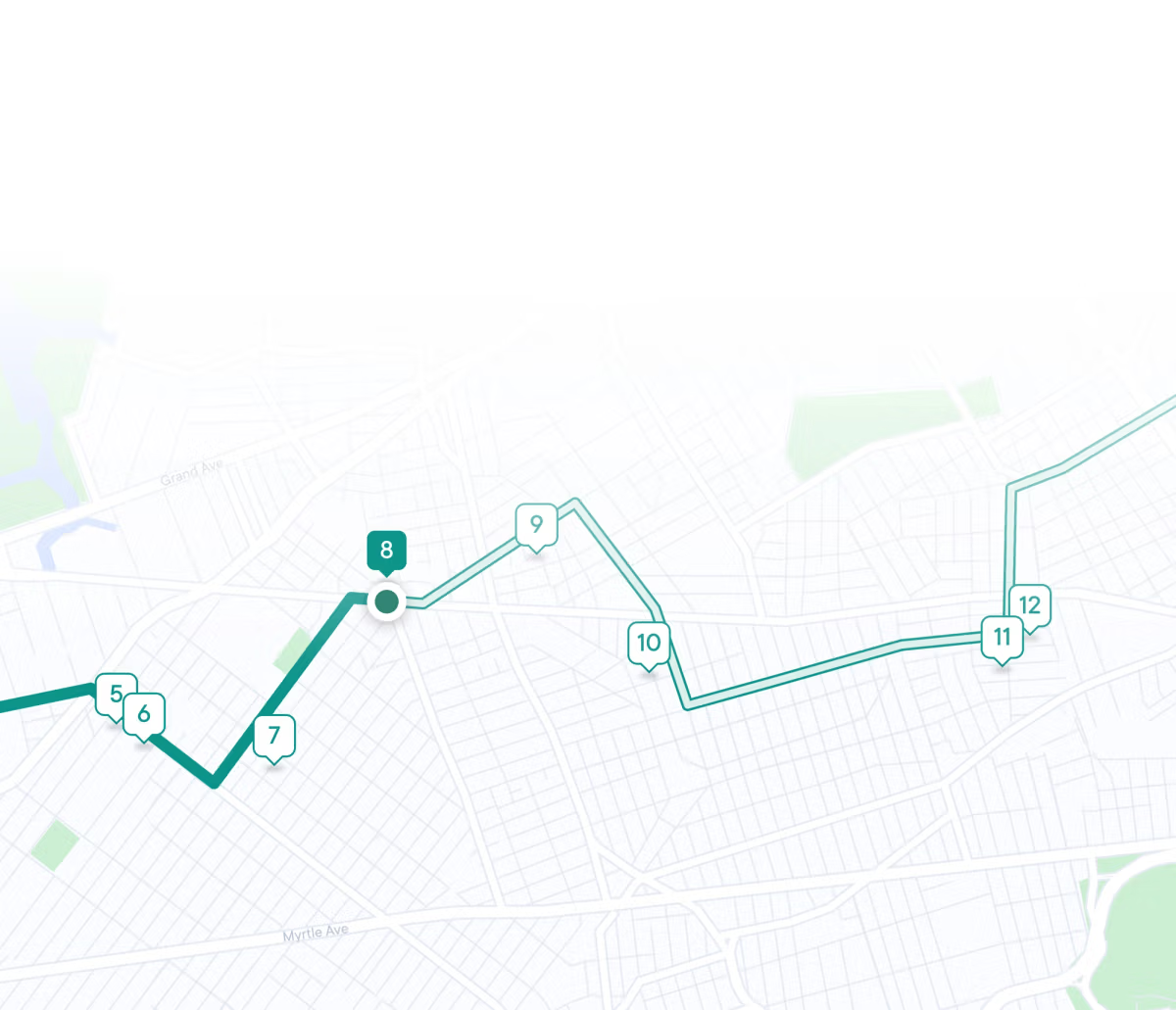
  • Preview routes on an interactive map before publishing to drivers.
Import stops AI sequencing Manual override Map preview
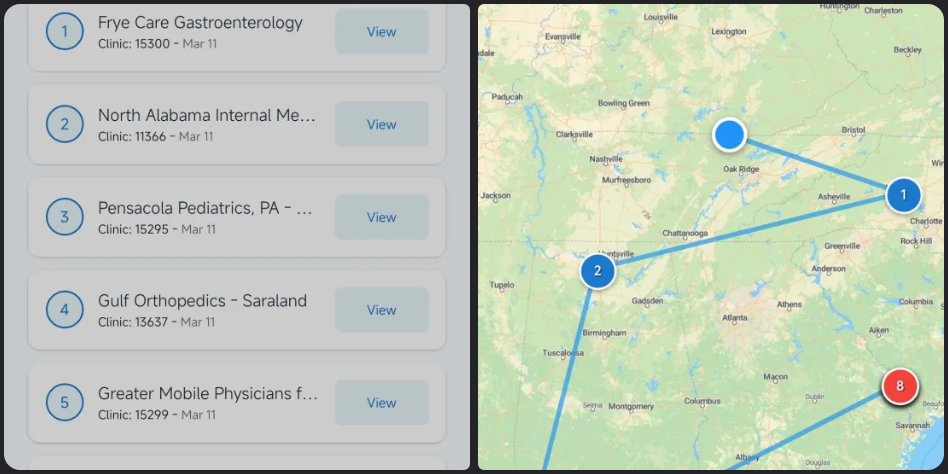
Stop Sequencing
AI-optimized sequences
Why it matters

Why It Matters: Manual sequencing wastes time and fuel. Dispatchers often sequence stops by memory or habit, missing better paths. RouteGeniusAI finds the optimal sequence in seconds.

Best practice

Human-in-the-Loop: The system suggests, but your team decides. If you know a clinic prefers mornings or a route needs to visit warehouse first, you can override the AI.
Windows

Time Window Constraints

Enforce service windows so routes respect clinic hours and specimen handling requirements.

  • Define arrival time windows for each stop (e.g., "Morning clinic: 8am-11am").
  • Routing engine ensures sequences respect all time windows.
  • System alerts if a valid route cannot meet all window requirements.
  • Automatic fallback suggestions if time windows conflict.
Clinic hours Specimen windows Constraint solving Fallback routing
Time Window Constraints
Constraint enforcement
Why it matters

The Problem: Specimens have handling windows. Arrive outside the window = delayed processing or waste. Generic route platforms ignore this.

Best practice

RouteGeniusAI Solution: Time windows are first-class constraints. The system will not generate a route that violates them.

Rules

Business Rules Engine

Apply custom rules that reflect how your operation actually works.

  • Define rules for depots, territories, vehicle capacity, and driver availability.
  • Example: "North territory routes must start from Boston depot" or "Driver John has Monday off".
  • Rules automatically apply to all future route planning without manual entry.
  • Edit rules in real-time to reflect staffing changes or seasonal adjustments.
Depot constraints Territory rules Capacity limits Driver availability
Business Rules Engine
Operation-specific logic
Why it matters

Why This Matters: Every lab network has unique operational constraints. Generic platforms force you to plan around their assumptions.

Best practice

RouteGeniusAI Approach: Instead of fighting the system, you define your rules once. The routing engine respects them automatically.

Handoff

Route Review & Handoff

Review routes before publishing and hand off to drivers with complete context.

  • Dispatchers review generated routes on an interactive map before publishing.
  • View estimated mileage, time, and stop count for each route.
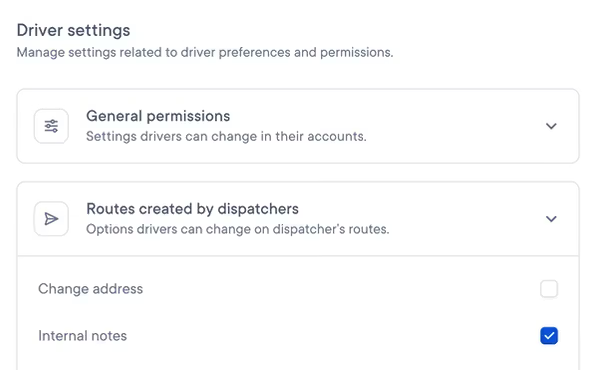
  • Add notes, instructions, or special handling flags before drivers receive routes.
  • One-click publishing sends routes to driver app with full context and instructions.
Route review Map visualization Route notes One-click publish
Route Review & Handoff
Quality control
Why it matters

Safety Check: Published routes are final. Dispatchers need a moment to verify nothing is obviously wrong.

Best practice

Context Matters: Drivers benefit from notes like "Loading dock entrance on north side" or "Call clinic before arriving."

Analytics

Route Analytics & Insights

Measure route performance and identify optimization opportunities.

  • Track actual mileage vs. planned mileage for every route.
  • Measure on-time performance, stop completion, and service quality.
  • Identify patterns in delays or inefficiencies across routes.
  • Use insights to refine rules and improve future planning.
Route metrics Performance trends Delay analysis Improvement insights
Route Analytics & Insights
Data-driven planning
Why it matters

Feedback Loop: Planning is not a one-time task. Real execution data feeds back into planning decisions.

Best practice

Continuous Optimization: If a route consistently runs 15% longer than planned, investigate why and adjust.